
Roof Cleaning Guide · Eugene, OR
Can You Pressure Wash an Asphalt Shingle Roof?
If your roof has dark streaks or green moss, the cleaning method matters. High-pressure washing can damage asphalt shingles, so a suitable low-pressure treatment is generally a better option.
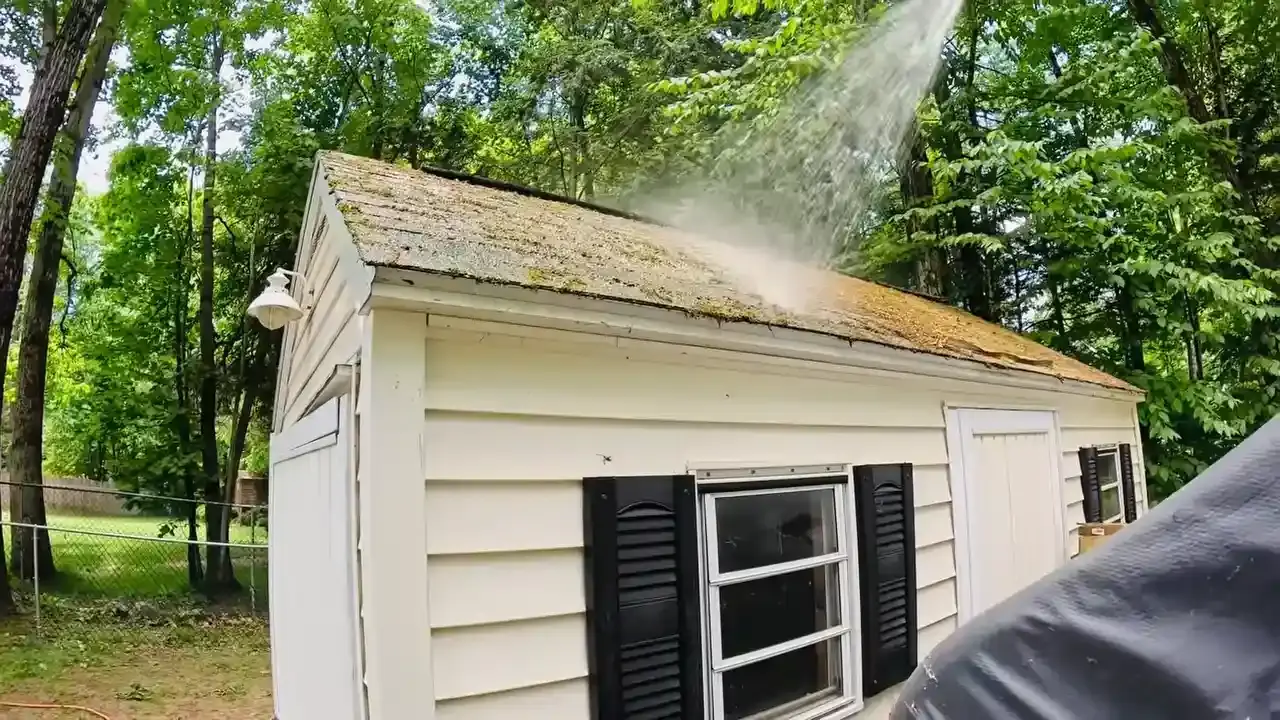 Asphalt shingles · Eugene
Can you pressure wash an asphalt shingle roof? In most cases, no. High-pressure washing is generally not recommended because it can dislodge protective granules, damage shingle edges, and force water beneath the roofing. A suitable manufacturer-approved low-pressure treatment is generally more appropriate.
- High pressureCan dislodge protective shingle granules
- Roof designShingles are designed to shed water downward
- Low pressureA more suitable approach when manufacturer-approved
- Eugene climateShade and moisture can encourage roof moss
If your asphalt shingle roof has developed dark streaks, green moss, or stubborn organic growth, you may be wondering whether pressure washing is the quickest way to clean it. After all, pressure washing works well on many outdoor surfaces, including concrete driveways, sidewalks, and some exterior areas.
However, an asphalt shingle roof is different. Using excessive water pressure on shingles can cause damage, remove protective granules, and potentially shorten the roof’s service life.
For homeowners in Eugene, Oregon, where frequent rainfall, shade, and damp conditions can encourage roof moss and algae, choosing the right cleaning method is particularly important.
So, can you pressure wash an asphalt shingle roof? In most situations, high-pressure washing is not recommended. A properly selected low-pressure cleaning approach is generally a safer option.
Let’s look at why pressure washing can be harmful, what causes roof growth, and which cleaning methods are more appropriate for asphalt shingles.
Can You Pressure Wash an Asphalt Shingle Roof Without Causing Damage?
Asphalt shingles are designed to protect your home from rain, wind, and changing weather conditions. Their protective surface includes mineral granules that help shield the underlying asphalt from sunlight and physical wear.
High-pressure water can disturb this protective surface.
If you are asking, can you pressure wash an asphalt shingle roof to remove moss quickly, it is important to understand the risks first. Here are the main reasons high-pressure washing is generally a poor choice.
1. High Pressure Can Remove Protective Granules
The small granules covering asphalt shingles serve an important purpose. They help protect the asphalt from ultraviolet exposure and contribute to the shingle’s overall durability.
An aggressive pressure-washing stream can loosen and dislodge these granules.
Once granules are lost, the exposed asphalt may become more vulnerable to weathering. This is one reason professional roof cleaners avoid treating asphalt shingles like concrete or other durable surfaces.
2. Water Can Get Beneath the Shingles
Roofing systems are designed to shed water downward. They are not intended to withstand concentrated water streams directed upward or underneath the shingle edges.
Pressure washing from an improper angle can force water beneath shingles, potentially reaching the roof decking or other underlying materials.
This may increase the risk of moisture-related problems, particularly around vulnerable roof sections.
3. High Pressure Can Damage Shingle Edges
Older asphalt shingles may become brittle or weakened over time.
A concentrated water stream can lift shingle edges, disturb overlapping sections, or damage already deteriorated materials.
Even when visible damage is not immediately apparent, aggressive cleaning can create problems that may become more noticeable later.
4. Pressure Washing Does Not Address the Cause of Moss Growth
Pressure washing may remove visible moss, but it does not necessarily address the conditions that allow moss to return.
In Eugene, roof moss commonly develops in areas that remain damp and shaded. Simply blasting away the visible growth may leave underlying organic material and favorable growing conditions behind.
A suitable treatment approach should consider both the existing growth and the factors contributing to its return.
Why Roof Moss and Algae Are Common in Eugene, Oregon
Eugene’s climate creates conditions that can encourage organic growth on residential roofs.
Frequent rainfall, seasonal moisture, tree coverage, and limited sunlight can allow moss and algae to develop on asphalt shingles.
Some areas are particularly vulnerable.
Shaded Roof Sections
Roof sections that receive limited direct sunlight often stay damp longer after rainfall.
North-facing roof slopes and areas shaded by nearby trees can provide favorable conditions for moss development.
Overhanging Trees
Trees provide shade and can deposit leaves, needles, small branches, and other organic debris onto roofing surfaces.
When debris collects in valleys or other areas where moisture remains, it can contribute to conditions that support moss growth.
Persistent Moisture
Moss thrives in damp environments.
In Western Oregon, extended periods of wet weather can allow roof surfaces to remain moist for longer periods, especially during fall and winter.
Poor Air Circulation
Roof sections surrounded by dense tree cover or nearby structures may receive less airflow and sunlight.
This can slow drying and make certain areas more susceptible to recurring organic growth.
Understanding these conditions helps homeowners make better roof maintenance decisions.
What Is the Safest Way to Clean an Asphalt Shingle Roof After You Decide Not to Pressure Wash It?
The appropriate cleaning method depends on the roof’s age, condition, shingle manufacturer’s recommendations, and the type of growth present.
For many asphalt shingle roofs, a manufacturer-approved cleaning treatment applied without high-pressure washing is more appropriate. This is the safer direction to consider when asking, can you pressure wash an asphalt shingle roof without damaging it?
1. Start With a Roof Inspection
Before cleaning begins, the roof should be evaluated for:
- Missing or damaged shingles
- Loose or deteriorated shingle edges
- Heavy moss accumulation
- Damaged flashing
- Existing signs of water intrusion
- Areas with excessive debris
An inspection helps determine whether cleaning is appropriate or whether roofing repairs should come first.
2. Select an Appropriate Cleaning Treatment
Different types of roof growth may require different treatment approaches.
For moss and algae on asphalt shingles, professional cleaners commonly use manufacturer-recommended cleaning solutions. Some asphalt shingle manufacturers provide guidance on sodium hypochlorite-based treatments and application procedures.
The exact solution, concentration, application method, and precautions should follow the roofing manufacturer’s instructions and applicable safety requirements.
3. Avoid Aggressive Scrubbing
Heavy moss should not be aggressively scraped or scrubbed from asphalt shingles.
Physical force can loosen granules and damage the shingle surface.
A suitable treatment may allow organic growth to deteriorate gradually rather than requiring aggressive mechanical removal.
4. Allow the Treatment to Work
Depending on the treatment and the condition of the roof, visible improvement may take time.
Some dead moss may remain attached temporarily before gradually loosening through natural weather exposure.
Homeowners should not assume that every roof must look completely clean immediately after treatment.
5. Inspect the Results
After treatment, the roof should be evaluated to determine whether additional attention is needed.
The objective is to address unwanted growth while preserving the condition of the roofing materials.
Can You Pressure Wash an Asphalt Shingle Roof, or Is Soft Washing Better?
The terms pressure washing and soft washing are sometimes used interchangeably, but they describe different cleaning approaches.
Pressure washing relies on mechanical water force to remove dirt and surface buildup.
Soft washing uses an appropriate cleaning solution with low-pressure application to address organic growth without relying on aggressive water pressure.
Here is a simple comparison:
| Feature | High-pressure washing | Appropriate soft washing |
|---|---|---|
| Cleaning approach | Mechanical force | Cleaning treatment |
| Shingle safety | Risk of damage | Generally more suitable when properly performed |
| Granule protection | Can dislodge granules | Avoids aggressive water pressure |
| Moss treatment | May remove visible growth | Can treat organic growth |
| Suitable for asphalt shingles | Generally not recommended | Often appropriate when manufacturer-approved |
Soft washing is not automatically safe simply because it uses lower pressure. The chemical selection, concentration, application, runoff control, and roof condition all matter.
For this reason, roof cleaning should be performed using methods appropriate for the specific roofing material. The answer to can you pressure wash an asphalt shingle roof is not simply about the power of the machine. It is about protecting the shingle surface, controlling water, and following the roof manufacturer’s care guidance.
Can You Remove Roof Moss Yourself?
Some homeowners consider cleaning their roofs themselves to save money. However, roof cleaning involves more than choosing a cleaning solution.
Working on a sloped roof creates fall risks, particularly when the surface is wet or covered with moss.
There are also risks associated with:
- Using the wrong cleaning chemicals
- Applying excessive pressure
- Damaging shingles while removing moss
- Allowing cleaning solutions to reach plants or landscaping
- Directing water into vulnerable roof areas
- Walking on deteriorated roofing materials
For these reasons, hiring an experienced roof cleaning professional is often the better choice.
If your roof has significant moss growth, damaged shingles, or signs of leakage, consider having it inspected before any cleaning takes place.
How Can You Help Prevent Moss From Returning?
Cleaning is only one part of maintaining an asphalt shingle roof.
A few maintenance practices can help reduce conditions that encourage moss and algae growth.
Keep Gutters Clear
Blocked gutters can interfere with proper water drainage and contribute to moisture problems around the roofline.
Regular gutter maintenance helps rainwater move away from your home’s exterior.
Remove Accumulated Roof Debris Carefully
Leaves, branches, and other organic debris can collect in roof valleys and other areas.
Have debris addressed using methods appropriate for the roofing material. Avoid walking on shingles or using aggressive tools.
Maintain Nearby Trees
Overhanging branches can shade the roof and deposit organic debris.
Where appropriate, maintaining trees and trimming problematic branches can improve sunlight exposure and airflow.
Schedule Periodic Roof Inspections
A periodic inspection can help identify early signs of moss, algae, damaged shingles, and drainage problems.
Addressing issues early may help prevent more extensive maintenance needs.
Consider Manufacturer-Approved Moss Prevention Options
Some homeowners consider zinc or copper-based roof strips to help discourage moss growth.
Their effectiveness depends on installation, roof design, weather exposure, and the existing condition of the roofing materials.
These products should be selected and installed with appropriate roofing guidance.
When Should You Consider Professional Roof Cleaning in Eugene?
It may be time to consider professional roof cleaning when you notice:
- Green moss developing across shingles
- Dark algae streaks becoming more visible
- Organic growth concentrated on shaded roof sections
- Moss accumulating near roof valleys
- Debris collecting around roof edges
- Repeated moss development despite regular maintenance
Not every roof needs immediate cleaning. The appropriate timing depends on the roof’s condition, the amount of growth, and the manufacturer’s maintenance recommendations.
A professional assessment can help determine whether cleaning is appropriate and which method should be used.
Who Should Clean an Asphalt Shingle Roof in Eugene, OR?
If your asphalt shingle roof has developed moss or algae, choosing the right cleaning approach can help protect your roofing investment.
Evergreen Surface Care provides exterior cleaning services for homeowners in Eugene, Oregon, with attention to the different materials and conditions found around residential properties.
Our approach focuses on selecting suitable cleaning methods rather than treating every exterior surface the same way.
Whether you are concerned about roof moss, organic growth, or general exterior maintenance, professional guidance can help you make an informed decision.
Explore our Roof Cleaning Services in Eugene to learn more about professional roof cleaning.
You can also learn about our Soft Washing Services for other exterior surfaces that require a lower-pressure cleaning approach.
Contact Evergreen Surface Care today to discuss your roof cleaning needs and request a quote.
Frequently Asked Questions
Can you pressure wash an asphalt shingle roof?
High-pressure washing is generally not recommended for asphalt shingles because it can remove protective granules, damage shingle edges, and force water beneath roofing materials. Manufacturer-approved low-pressure cleaning treatments are generally more appropriate.
Will pressure washing remove moss from roof shingles?
Pressure washing may remove visible moss, but it can also damage the shingles. A suitable roof treatment is generally preferred over aggressive water pressure.
Is soft washing safe for asphalt shingle roofs?
Soft washing can be appropriate when the cleaning solution, concentration, application technique, and safety precautions follow the roofing manufacturer’s recommendations. Improper chemical use can still damage roofing materials or surrounding landscaping.
How often should an asphalt shingle roof be cleaned in Eugene?
There is no universal cleaning schedule for every roof. Shading, nearby trees, moisture exposure, roof age, and the amount of organic growth all influence maintenance needs. Periodic inspections are more useful than automatically cleaning every roof at fixed intervals.
Does roof moss damage asphalt shingles?
Moss can retain moisture and grow around shingle edges. Heavy growth may interfere with proper drainage and contribute to premature roofing deterioration. Addressing moss appropriately can help protect the roof.
Can I use bleach to clean my asphalt shingle roof?
Do not apply household bleach or an improvised chemical mixture without checking the roofing manufacturer’s cleaning instructions. Some manufacturers recommend specific sodium hypochlorite-based treatments, but concentration, application, rinsing requirements, and environmental precautions are important.
Does soft washing remove black streaks from asphalt shingles?
Black streaks are often associated with algae growth. An appropriate manufacturer-approved cleaning treatment can help address these stains without aggressive pressure washing.
Should I replace my roof if it has moss?
Not necessarily. Moss growth alone does not mean a roof needs replacement. The roof’s age, shingle condition, granule loss, leaks, and structural condition should be evaluated before making that decision.
Final Thoughts
If you are still wondering, can you pressure wash an asphalt shingle roof, the safest answer is to avoid using a high-pressure stream on the shingles. Pressure washing may be effective for concrete driveways and other durable outdoor surfaces, but asphalt shingles require a different approach.
High-pressure washing can damage the protective granules and disturb roofing materials. A suitable low-pressure treatment, selected according to manufacturer recommendations, is generally a better option for addressing moss and algae.
For homeowners in Eugene, where moisture and shaded roof sections can encourage organic growth, regular inspections and appropriate maintenance can make a meaningful difference.
When in doubt, have your roof evaluated by a qualified professional before attempting to clean it.
Choose a Roof Cleaning Method That Respects Your Shingles
If your asphalt shingle roof has moss or algae, start with an assessment of its condition and the manufacturer’s cleaning recommendations. Contact Evergreen Surface Care to discuss your exterior cleaning needs.
Evergreen Surface Care provides pressure washing in Eugene, OR with surface-specific methods for roofs, siding, concrete, decks, fences, patios, and other exterior materials.