
Gutter Cleaning · Eugene, OR
7 Signs Your Gutters Are Clogged Before the Water Damage Starts
Most Eugene homeowners notice the first sign in November. By then the damage has usually been building since September. That gap matters more here than almost anywhere else in the country.
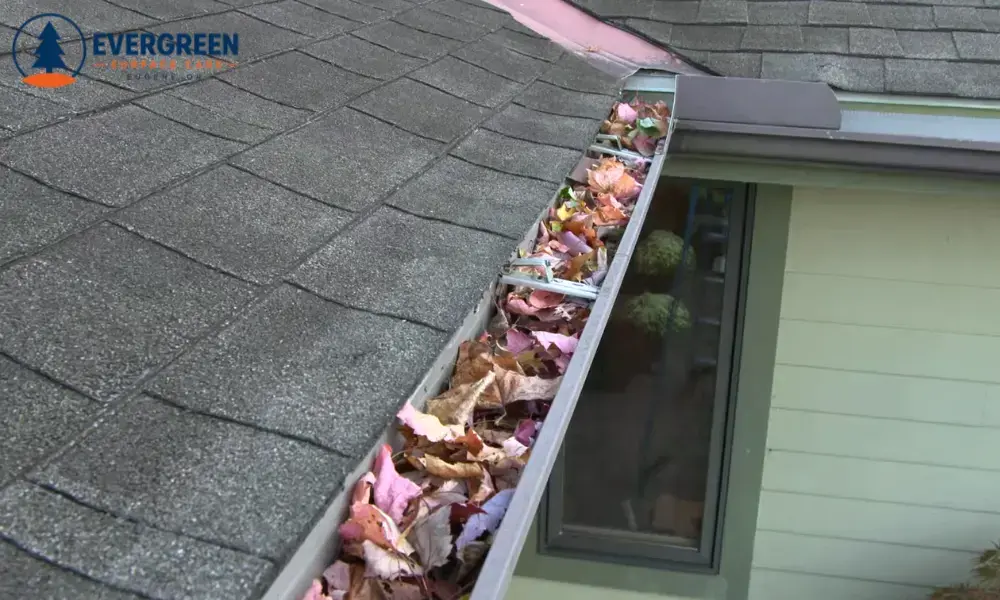
Clogged gutters announce themselves in seven ways: water spilling over the edge in rain, stains streaking down your siding, sagging or pulling gutter sections, plants sprouting from the trough, pooling water near the foundation, peeling paint under the eaves, and birds or insects moving in.
Most Eugene homeowners notice the first sign in November. By then the damage has usually been building since September.
Why Eugene gutters clog differently
Eugene averages just under 41 inches of rain a year, and it does not fall evenly. December alone brings 7.21 inches. November brings 5.98. January brings 6.05. Meanwhile July delivers 0.32 inches and August delivers 0.39.
- 40.83″ Average annual rainfall
- 7.21″ December, the wettest month
- 0.32″ July, the driest month
- 13.19″ November and December combined
Rainfall normals from the National Weather Service Portland forecast office, 1991–2020 climate data for Eugene. View the source data.
Read those numbers again. Your gutters handle almost nothing for two months, then take on twenty times that volume when the rains return.
The clog does not form during the rainy season
It forms during the dry one. Douglas fir sheds needles all summer. Big-leaf maple drops in October. By the time the first serious storm arrives in late September or early October, the trough is already packed and the water has nowhere to go.
Fir needles are the specific local problem. They are small, they interlock, and they mat down into a dense fibrous layer that behaves more like felt than like debris. A leaf blows out. A packed layer of fir needles does not.
The seven signs, in the order they appear
-
Water pours over the edge instead of moving through
Go outside during a real downpour. Not a drizzle, a downpour.
Water should exit through your downspouts. If it sheets over the front lip of the gutter like a small waterfall, the trough is full and the water is taking the only route available.
This is the single most reliable sign, and it is also the one people ignore longest, because the only time you can see it is the exact time you least want to stand outside.
-
Dark streaks running down the outside of your gutters
Those vertical black or brown stains are called tiger striping. They form when overflowing water carries dirt, pollen, and asphalt granules over the gutter lip and down the face.
Two things worth knowing. First, the stains do not wash off in rain, because they bond to the aluminum surface. Second, they are cosmetic evidence of a functional problem. The staining is not the issue. The overflow that caused it is.
-
Your siding has stains it did not have last year
When a gutter overflows, the water does not fall straight down. Wind pushes it against the house.
Look at the siding directly beneath your gutter line, especially on north-facing walls where Eugene shade keeps things damp. Green algae, dark streaking, or discoloration in a vertical pattern points at overflow above it. Persistent moisture feeds algae growth on siding, which is when a wall needs exterior house washing rather than a rinse.
-
A section of gutter is sagging or pulling away
Water is heavy. A gallon weighs 8.34 pounds.
A ten-foot section of a standard 5-inch K-style gutter holds roughly 5 gallons when full. Pack it with saturated fir needles and wet maple leaves and you are hanging over 60 pounds off fasteners rated for a fraction of that.
Sagging is not a cosmetic complaint. It means the hangers are already failing. Once a section pulls away from the fascia, water runs behind the gutter and directly into the wood it was mounted to.
-
Something is growing in your gutters
If you can see green from the ground, you have a soil layer up there.
Decomposed needles and leaves turn into organic matter. Add Eugene rainfall and shade, and moss establishes fast. Seedlings follow. People find maple sprouts and fern growth in gutters here every year.
Moss in the gutter usually means moss on the roof too, since the same conditions produce both. That is a separate job, and roof moss removal in Eugene uses a much lower pressure than gutter work. The two problems travel together often enough that finding one is worth checking for the other.
-
Water pools near your foundation after rain
Walk your perimeter the morning after a storm.
Downspouts exist to move water away from the house. When the gutter above them is blocked, water dumps straight down along the foundation line instead. You will see standing puddles, soil erosion in the beds, or splash staining on the lower siding and concrete.
This is the sign with the largest financial consequence. Foundation water intrusion, crawlspace moisture, and basement seepage all start here. Gutter cleaning costs a few hundred dollars. Foundation drainage work does not.
Overflow also stains flatwork. Repeated dumping onto a driveway or walkway leaves dark patches that outlast the rain.
-
Peeling paint or soft wood under the eaves
This one shows up last, and it is the one that means you have waited too long.
Look at the fascia board behind the gutter and the soffit underneath. Bubbling paint, dark discoloration, or wood that feels soft to a firm press means water has been sitting against it for a while.
At this stage you are past a cleaning problem. You are into carpentry.
What about birds, wasps, and rodents?
Worth a mention, because it surprises people.
A packed gutter is a dry, sheltered, elevated platform
Birds nest in them. Wasps build in them. In older Eugene neighborhoods with mature tree cover, rodents use clogged gutters as a route to roof access points. If you see repeated bird activity along one section of roofline, that section is worth a look.
How fast does a Eugene gutter actually clog?
Faster than most national guidance assumes.
Standard advice says clean gutters twice a year. That advice is written for regions where deciduous leaves are the main input and the drop happens over a few weeks in autumn.
Western Oregon does not work that way. You have conifer needle drop through summer, deciduous leaf drop in October and November, and moss growth that continues through the wet months. If your home sits under mature Douglas fir, the practical answer is often more than twice.
Here is the contrarian part
Some Eugene homes with heavy fir cover need three cleanings a year, and some homes with no overhanging trees genuinely need one. Anyone who quotes you a fixed schedule without looking at your specific tree cover is guessing.
What to check before you call anyone
The ground-level inspection
Everything on this list can be done from your yard, in ordinary shoes.
- Look along the gutter line for sagging, separation, or visible growth
- Check the siding beneath for vertical staining
- Walk the perimeter for pooling, erosion, or splash marks
- Look at the fascia and soffit for paint failure or discoloration
- If it is raining, watch where the water actually goes
If two or more of these show up, the gutters need attention before the next serious storm.
When it stops being a DIY job
Plenty of people clean their own gutters, and on a single-story house with good ladder footing, that is reasonable.
Three situations where it stops being reasonable.
- Two-story homes, where a fall becomes a serious injury
- Steep or wet roofs, which describes most Eugene roofs from October onward
- Any gutter that is already sagging, because the fastener failure needs addressing and not just the debris
If you are seeing several of the seven signs and the wet season is approaching, our gutter cleaning service in Eugene covers homes across Lane County.
FAQs About Signs of Clogged Gutters
How do I know if my gutters are clogged without climbing up?
Watch them during heavy rain. Water overflowing the front edge instead of exiting the downspout is the clearest ground-level confirmation. Vertical staining on the gutter face and on the siding below are secondary indicators you can check any time.
What time of year should Eugene gutters be cleaned?
Late spring after conifer needle drop, and mid to late autumn after deciduous leaves finish falling. The autumn cleaning matters most, because it comes right before November and December deliver over 13 inches of rain between them.
Can clogged gutters really damage a foundation?
Yes. Blocked gutters dump concentrated water directly along the foundation line rather than routing it away. Over repeated storms this causes soil erosion, hydrostatic pressure against foundation walls, and moisture intrusion into crawlspaces.
Do fir needles clog gutters worse than leaves?
In practice, yes. Needles are small enough to pass through most guard systems and dense enough to mat into a layer that water cannot penetrate. Leaves tend to sit loosely and often blow clear. Needles compact and stay.
My gutters overflow but they look clean. What is happening?
Usually a downspout blockage rather than a trough blockage. Debris collects at the downspout elbow where the pipe turns. The gutter looks fine from below while the exit is completely sealed.
How much does gutter cleaning cost in Eugene?
Pricing depends on home size, roof pitch, number of stories, and debris volume. Homes under heavy fir cover typically cost more because the volume is higher and needles require more thorough flushing.
Are gutter guards worth it under fir trees?
That deserves a longer answer than fits here, and the honest version is more complicated than most manufacturers admit. Needle-sized debris passes through or clogs the surface of many guard designs.
What happens if I skip a season?
One skipped cleaning rarely causes structural damage on its own. The risk compounds. A gutter that entered the wet season packed will hold standing water all winter, which accelerates fastener corrosion, moss establishment, and fascia rot.
The five minutes that saves the winter
Go look at your gutters this week.
Not next month, and not after the first storm. The whole point of the seven signs is that they appear in sequence, and the early ones cost a few hundred dollars to address while the late ones cost thousands.
If you are seeing overflow and staining now, you are early. That is a good place to be.
What is growing in yours?
Get Your Gutters Cleared Before November
Tell us how many stories your home has, roughly how long since the last cleaning, and whether you have fir or maple overhead. We will give you a written quote before any work starts.
Evergreen Surface Care serves homes and businesses across Eugene and nearby Lane County. Free written estimate. Surface-safe methods. No surprise charges.