
Driveway Cleaning · Eugene, OR
Why Eugene Driveways Turn Green and How to Stop It Coming Back
The green film is alive. It grew there, it holds water against your concrete, and it turns slick the moment it rains. Killing it and removing it are two separate jobs, and most people only ever do one of them.
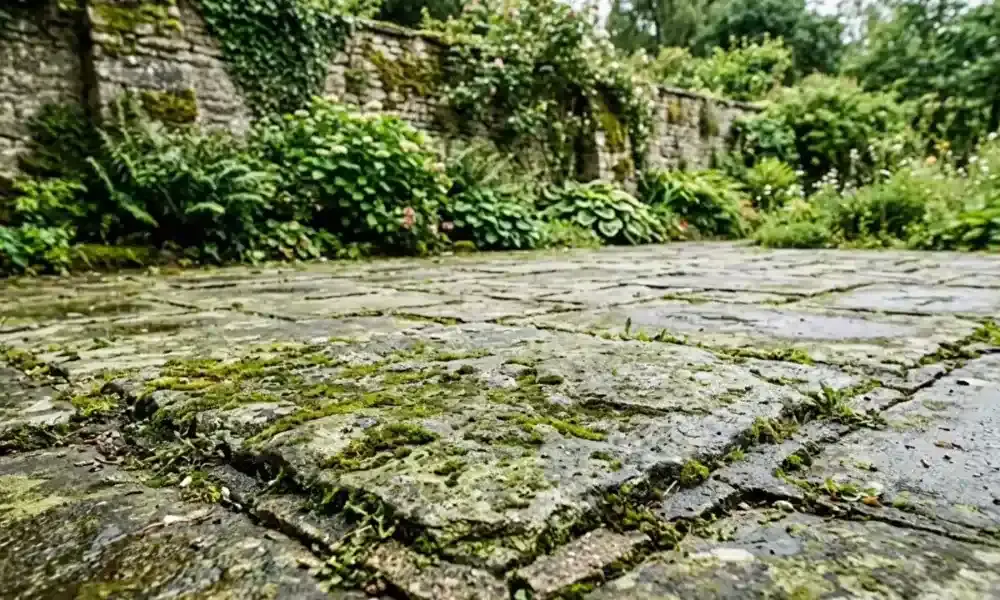
Your driveway is green because algae and moss are growing on it, and Eugene supplies eight months of exactly the conditions they need. Shade, constant moisture and a porous surface are the whole recipe. Pressure alone strips the visible layer and leaves the living cells behind, which is why it returns within a season.
A clean that lasts kills the growth first with a low-pressure treatment, removes it second, then reduces the shade and standing water that fed it.
Here is the part that surprises people. The green is not dirt that blew in from somewhere else. It grew there, from spores already in the air, and it will grow back on a perfectly clean slab if nothing about the conditions changes.
That single fact changes how you should approach the whole job, whether you handle it yourself or book driveway cleaning in Eugene and let someone else deal with it.
What is the green stuff on my driveway?
Three different organisms cause almost all of it, and they do not respond to the same treatment. Getting the identification right saves you an afternoon and a wasted bottle of product.
-
Most common
Green algae
A thin, slimy film. Bright green when wet, dull grey-green when dry. It lies flat on the surface and smears if you drag a shoe across it.
This is the one that causes falls.
-
Second
Moss
Raised, spongy cushions. It anchors in expansion joints, along edges, and in any low spot that holds water after rain.
Holds moisture against the concrete for days.
-
Slowest
Lichen
Flat, crusty, pale green or grey patches with a defined circular edge. It looks painted on because it effectively is.
Needs dwell time, not force.
Most Eugene driveways have at least two of the three. The shaded north edge usually grows moss, the open middle grows algae, and anything sitting under a fir gets both at once.
Why does this happen so badly in Eugene?
Because the Willamette Valley runs a long, cool, wet season that keeps concrete damp for months at a time. Algae and moss do not ask for much. They need water, indirect light and something to cling to. From roughly October through May, this valley supplies all three almost without a break.
- ~46 in Average annual rainfall in Eugene
- Oct–May The growth window in Lane County
- 1–2 yrs Typical regrowth after a clean
- $150–350 Usual driveway cleaning range here
Compare that with a dry climate. In Phoenix a slab dries within an hour of a rare rainfall and nothing organic gets a foothold. Here, a north-facing driveway under a Douglas fir can stay damp from one rain to the next for weeks on end.
The tree canopy matters more than the rain does
This is the part homeowners underrate. Rain falls the same on every property on the street, yet one driveway is green and the neighbour’s is not.
The difference is almost always shade and debris. Fir needles and big-leaf maple leaves drop onto the concrete, trap moisture underneath, and break down into the thin organic film that algae colonises first. A driveway that gets four hours of direct summer sun recovers between rains. One that never does keeps a permanent damp layer.
The clearest sign it is a moisture problem, not a dirt problem
Look at where the green stops. If it fades out exactly along the shade line, or follows the drip edge of a roof, you are looking at biology responding to moisture rather than grime that settled. Cleaning it without addressing that line means cleaning it again next year.
Is a green driveway actually a problem, or just ugly?
It is a traction problem first and a maintenance problem second. Algae on wet concrete has roughly the grip of wet tile. That matters most on sloped driveways, on the path from the car to the front door, and for anyone in the house who is unsteady on their feet.
Past the slip risk, three things happen slowly.
- Moss holds water in joints and cracks. Saturated concrete going through winter freeze cycles takes damage that dry concrete does not
- Moss opens up what is already there. It does not crack sound concrete, but it widens hairline cracks and pushes joint sand out of paver seams
- It hides everything underneath. Failing sealant, drainage faults and early cracking all stay invisible until the slab is clean
The same logic applies above ground level. Organic growth on a north-facing roof causes far more expensive damage than it does on a driveway, which is why roof moss removal in Eugene is usually the more urgent of the two jobs.
Why does the green come back so fast after pressure washing?
Because pressure removes the growth without killing it. A high-pressure wand strips the visible layer off in seconds and the driveway looks transformed. What it leaves behind are living cells and spores down in the pores of the concrete, below the reach of the water.
Two months of Eugene rain later, those cells have repopulated the surface. The homeowner concludes that pressure washing does not work, when the real issue is that only half the job was ever done.
Here is the contrarian bit, and it is genuinely where professional practice has moved over the last decade. The chemical does the work and the pressure only rinses. A sodium hypochlorite based treatment applied at low pressure kills algae, moss and lichen at the cellular level. Once it is dead, far less pressure is needed to lift it off, which is better for the concrete as well.
What high pressure actually costs you
Concrete has a hard, dense surface layer. Aggressive pressure erodes it and exposes the rougher, more porous material underneath. That surface holds water and organic debris more readily than the original finish did, so the next round of algae arrives sooner and grips harder. It is entirely possible to make a driveway more prone to turning green by cleaning it too hard.
The same principle drives every low-pressure method we use, from soft washing siding to cleaning timber. It is why a deck cleaning job and a driveway job use similar chemistry at very different pressures.
How to remove green algae from a concrete driveway
Clear the surface, apply a treatment, give it real dwell time, then rinse. The order matters more than the products do. Most failed attempts get the sequence right and cut the dwell time short.
-
Clear the surface before anything wet goes down
Sweep off leaves, needles and loose debris. Scrape thick moss clumps out of the expansion joints with a stiff broom or a joint scraper first.
Treatment applied over a mat of wet debris never reaches the growth underneath. Work on a dry surface where the weather allows it.
-
Match the treatment to what is actually growing
This is where the identification earlier pays off.
- Sodium hypochlorite, diluted is the standard for algae and acts within minutes
- Zinc sulfate products suit moss and lichen, working over days to weeks rather than minutes
- Potassium salts of fatty acids are the gentler option near planting, but need repeat applications
Read the dilution instructions rather than guessing. Stronger is not faster, and it raises the risk to everything growing beside the concrete.
-
Protect the plants before you apply anything
Pre-wet the grass, beds and shrubs bordering the driveway, then rinse them again once you have finished. Water dilutes whatever drifts onto them.
Lawn edges beside a driveway are the most common casualty of a weekend cleaning job, and the damage shows up two days later rather than immediately.
-
Let it dwell properly
This is where DIY attempts quietly fail. The treatment has to stay wet on the surface long enough to kill the organism, typically ten to fifteen minutes for algae.
Rinsing at three minutes washes the product away and leaves the growth alive. Reapply if the surface dries out before the time is up, which happens fast on a warm August afternoon.
-
Rinse with even, overlapping passes
Use a surface cleaner attachment if you have access to one. A bare wand leaves visible striping across a large slab, and those stripes are permanent enough that people notice them for years.
Keep the pressure moderate and consistent. Growth that has already been killed releases easily and does not need force.
-
Judge the result on a fully dry slab
Wet concrete always looks uniformly dark. Wait for a complete dry before deciding whether it worked or whether a stubborn patch needs a second pass.
Lichen in particular often needs two rounds. That is normal, not a sign the method failed.
Oil is the one thing this process will not touch, because it sits below the surface rather than on it. That needs a different approach entirely, covered in our guide to removing oil stains from a concrete driveway.
Which products actually work?
An honest assessment, based on how these behave on Willamette Valley concrete rather than on what the label promises.
- Diluted sodium hypochlorite. Cheap, fast and effective on algae and light moss. Harms lawn and planting if it is not diluted and rinsed properly
- Zinc sulfate moss killers. Slow but thorough on moss and lichen. Toxic to aquatic life, so runoff control is not optional with these
- Potassium salt products. Gentler around beds and pets. Rarely clears heavy established moss on its own
- No-rinse outdoor cleaners. Genuinely low effort on a light algae film. Not a fix for established moss, despite how they are marketed
- White vinegar. Popular online and weak in practice. It burns the top growth and leaves everything below it intact
- Hot water and a stiff broom. Fine for a small patch. Removes without killing, so it comes straight back
If you take one thing from that list, take this: the fast products remove and the slow products prevent. Heavy growth usually wants both.
How to stop the driveway going green again
Change the conditions, not just the surface. Growth returns because the shade, moisture and debris that produced it are all still there. Every item below removes one of those three.
Six things that keep it that way
None of these take long, and together they buy you years rather than months.
- Thin or prune overhanging branches so the concrete gets direct sun for part of the day
- Blow or sweep needles and leaves off monthly through autumn, before they mat down
- Fix the puddle, because standing water after rain is where moss establishes first
- Keep gutters and downspouts clear so roof runoff is not soaking one edge of the slab
- Apply a penetrating sealer during a genuinely dry stretch to reduce surface porosity
- Reapply a slow-acting moss preventer in early autumn, ahead of the wet season
The gutter point is the one people overlook, and it is often the entire cause. A downspout discharging onto or beside a driveway keeps that section permanently wet while the rest dries out. If your green is concentrated in one stripe, follow it upward. Gutter cleaning in Eugene solves a surprising number of concrete problems for that reason alone.
Timing the work around the Eugene calendar
Late spring through early autumn is the window. You need dry weather for the treatment to dwell properly, and a dry slab for any sealer to cure.
April and May book out fastest here, because that is when everyone looks at their driveway after the winter. Late summer usually offers faster scheduling and better drying conditions. A clean in August also means the surface goes into the wet season with nothing established on it, which is the single best-timed thing you can do for it.
Where does the wash water actually go?
Worth knowing before you empty a bottle of moss killer onto a slab that drains to the street. Storm drains in Eugene carry runoff toward local waterways rather than to a treatment plant. Zinc-based moss products and concentrated bleach are both harmful to aquatic life.
Handling it on a residential job is straightforward. Direct rinse water toward a lawn or planting bed rather than the street, sweep debris up instead of flushing it down, and avoid applying anything immediately before heavy rain. The EPA publishes best practices for washing runoff that cover the same principles.
Any contractor working on your driveway should be able to describe their runoff plan before they start. Ours is set out on the driveway cleaning page.
When is this worth paying someone for?
A small patch of algae and a garden sprayer is not a job for a contractor. Three situations genuinely change that.
- The growth has already come back once, which usually means the last clean removed without killing, and the same method will produce the same result
- The area is large, where wand striping across a full driveway looks worse than the algae did and does not fade
- The growth extends past the driveway, since cleaning one surface makes the neighbouring ones look worse than they did before
Standard driveway cleaning in Eugene runs between $150 and $350 depending on size, material and how heavy the growth is. Pavers cost more than plain concrete because the joint sand needs protecting. Bundling the walkway, the patio or a house wash into the same visit usually costs less than booking a second appointment, and the full range is on our services page.
FAQs About Green Driveways in Eugene
Why is my driveway green but my neighbour’s is not?
Almost always shade and drainage rather than anything you did differently. A driveway that gets a few hours of direct sun dries out between rains. One under a fir canopy or on the north side of a house stays damp for weeks, which is all algae needs. Check whether a downspout or roof edge is keeping one section wet.
Will bleach damage my concrete driveway?
Properly diluted sodium hypochlorite does not damage sound concrete. The real risks are to nearby lawn and planting, and to metal fixtures if it is left to pool. Pre-wet plants, rinse thoroughly afterwards, and never apply it undiluted. Old, already-crumbling concrete is a different matter and should be treated cautiously.
Does vinegar remove driveway algae?
Only lightly. Vinegar burns the visible top growth on a thin algae film, which looks like success for a fortnight. It does not penetrate far enough to kill moss or lichen, and in this climate the regrowth is usually visible within a season. It is a reasonable spot treatment, not a driveway solution.
How often should a driveway be cleaned in Eugene?
Once a year suits most properties here, ideally in late summer so the slab enters the wet season clean. Heavily shaded driveways under trees need it annually without exception, while an open sunny driveway can often stretch to eighteen months. Annual cleaning is far easier than clearing three years of established moss.
Is a green driveway actually slippery?
Yes, and this is the main practical reason to deal with it. Wet algae is one of the slipperiest surfaces you will walk on outdoors. The risk is highest on slopes, on steps and on the route between the car and the front door. Moss is less slick than algae but holds water, which keeps everything around it wet.
Can I pressure wash it off without using any chemicals?
You can, and it will look clean the same day. The problem is that pressure removes the growth without killing the cells and spores left in the concrete pores, so it repopulates quickly in a wet climate. High pressure also erodes the dense top layer of the concrete, which makes future growth take hold faster.
What is the difference between moss and algae on concrete?
Algae is a flat, slimy film that smears when rubbed. Moss is raised and spongy, anchors in joints and low spots, and holds water. They need different treatments. Algae dies within minutes under sodium hypochlorite, while moss and lichen usually respond better to slower zinc or potassium salt products.
Does sealing a driveway stop it turning green?
It slows it considerably rather than stopping it. Sealer reduces the porosity that gives algae something to grip, so growth arrives later and comes off more easily. It does nothing about shade or standing water, which are the underlying causes. Seal during a dry stretch, on fully dry concrete, and expect to redo it every few years.
Will moss come back after professional cleaning?
Eventually, unless the conditions change. A proper treatment kills what is there and buys you a season or two rather than a permanent fix. Pruning back shade, clearing autumn debris and fixing drainage is what extends that. Anyone promising moss will never return in a Willamette Valley climate is overselling.
Are paver driveways treated differently to concrete?
Yes. Pavers hold growth in the joints as much as on the surface, and high pressure blasts the joint sand out, which leads to shifting and weeds. Pavers get lower pressure, longer dwell time and often joint re-sanding afterwards. Tell any contractor the surface material before they quote.
Should I clean the driveway before or after the roof?
Roof first, always. Roof cleaning sends debris and runoff down onto everything below it, so a freshly cleaned driveway would simply need doing again. The usual sequence is roof, then gutters, then siding, then the concrete at ground level.
Does a green driveway affect my home’s value?
Not measurably in an appraisal, but noticeably in a viewing. The driveway is often the first surface a buyer walks on. Green concrete reads as deferred maintenance, which makes people look harder at the roof and gutters. It is one of the cheaper things to correct before listing.
The green is a symptom. The damp is the cause.
Every method on this page works. What decides whether it lasts is whether the driveway dries out between rains once the growth is gone.
So do it in the order that works. Kill it, remove it, then judge the result on a dry slab. After that, walk the driveway and find the reason it stayed wet, because that is the difference between cleaning it this year and cleaning it every year.
Which part of your driveway goes green first?
Get the Green Off Before the Rain Returns
Tell us the driveway size, the surface material, and whether the growth has come back after a previous clean. We inspect the surface, explain the method, and put the price in writing before any work starts.
Evergreen Surface Care serves homes and businesses across Eugene and nearby Lane County. Free written estimate. Surface-safe methods. No surprise charges.