
Deck Cleaning Eugene & Springfield
Deck Cleaning Eugene, OR That Removes Moss Without Wrecking Your Boards
If you own a deck in Eugene, the problem isn’t dirt. It’s moss. By February the shaded side is green and the stairs get slick, especially in South Hills and Santa Clara. Our deck cleaning Eugene lifts it at the root, not by force, using the same surface matched approach behind all our pressure washing in Eugene.
- Licensed & Insured
- Free Written Quotes
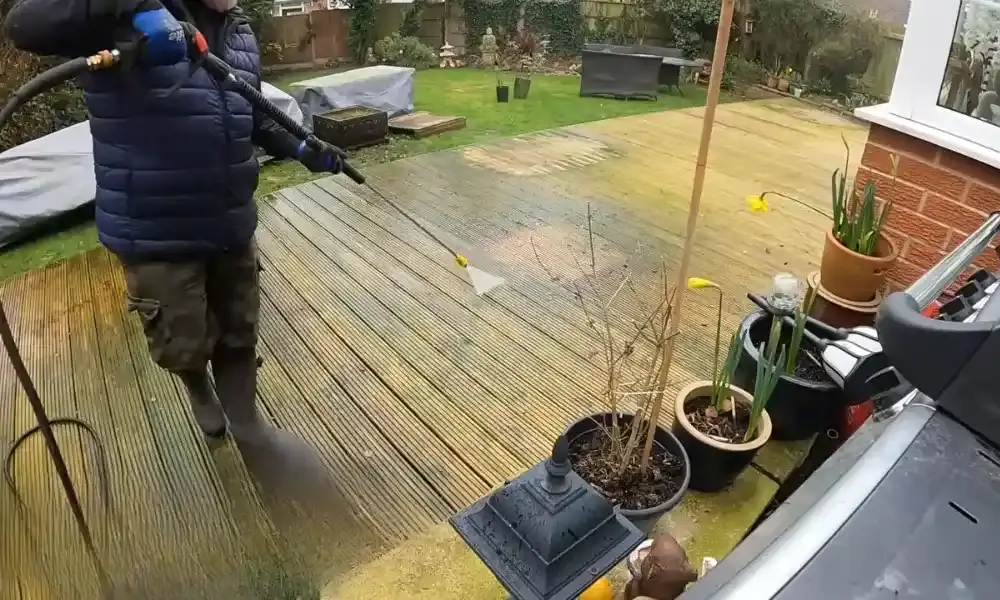
More pressure makes it worse, not cleaner.
Our cleaner does the work, not the force.
Cedar, composite, or pressure treated, your deck comes out clean and not stripped.
- Wood, Composite & Stone
- No Surprise Fees
Eugene Climate
Why Eugene Decks Grow Moss Faster Than Most of the Country
Eugene averages about 40.83 inches of rain a year, based on National Weather Service 30 year normals. The unusual part is the timing. Your deck stays wet for eight straight months, then bakes dry for two.
- 40.83″ Average annual rainfall in Eugene
- 90% Falls between early October and mid May
- 2% Falls in July and August, some years none at all
- 86% Winter humidity, so boards never fully dry
Moss doesn’t need soil. It needs moisture, shade, and a rough surface to grip. A deck under Douglas fir canopy on the north side of a Eugene house gets all three all winter, and winter humidity near 86 percent means the boards never really dry out between storms.
Here’s the part most people miss
A moss mat works like a sponge, holding water against the wood long after the rain quits. That trapped moisture causes rot at the board ends, cupping, and popped fasteners. The rain isn’t the problem. The moss holding it there is.
So we treat the growth at the root instead of blasting the surface. It stays gone longer. The same shade and moisture feeding your deck moss are usually working on the shingles overhead too, which is why deck cleaning and roof cleaning so often get booked on the same visit.
Materials & Pressure
What We Clean, and How We Adjust the Pressure
We clean wood, composite, pavers, brick, and stone decks across Eugene, Springfield, and Lane County. We never run one setting across a whole deck. Different boards take very different amounts of force.
- Low Pressure
- Surface Matched
- Follow Brand Spec
Pressure Treated Pine and Fir
The most common decking in Eugene, and reasonably tough. We generally work between 800 and 1,200 PSI, backing off on decks past the ten year mark. Older wood gives up fibers far easier than new.
Western Red Cedar and Redwood
Soft, oil rich, and the easiest wood in Oregon to ruin. The industry standard safe range is 500 to 600 PSI. Push past that and cedar furs up, meaning surface fibers lift and go fuzzy. Cleaning also strips natural oils, so a cedar deck is better off re-oiled afterward.
Composite, Including Trex and TimberTech
Composite grows algae worse than wood here, because the cap surface holds a damp film. Acid and chlorine bleach cleaners cause permanent damage, fading first and brittleness later.
Manufacturer spec also rules. TimberTech advises staying under 1,500 PSI with a fan tip along the grain, and Trex specifies a fan tip no closer than 8 inches on its listed lines. Voiding a warranty is expensive, so we follow the brand, not a rule of thumb.
Railings, Stairs, and Lattice
We clean these too. Plenty of quotes leave them out, and the stairs are where people slip in January.
Our Method
How We Clean a Deck, Step by Step
Usually it runs like this, though details shift with what we find.
-
We walk the deck first
We check the wood species, probe for soft spots at post bases and the ledger board, look at fasteners, and test a hidden board. Anything needing repair, you hear it right then.
-
We protect the area
Plants get wet down and covered, furniture and the grill get moved, and siding, windows, and storm drains are protected before any water starts.
-
We apply a wood safe cleaner at low pressure
An oxygenated cleaner based on sodium percarbonate. Never chlorine bleach.
-
We let it dwell, then agitate
This is the step DIY jobs skip. The solution needs time to break down the biofilm, and brushing lifts what’s rooted in the grain. Skip it and you reach for more pressure, which is how decks get damaged.
-
We rinse with a controlled low pressure fan
Wide fan tip, 12 to 18 inches off the boards, moving with the grain. We never put zero degree or turbo tips on wood.
-
We neutralize and brighten
Most cleaners are alkaline and wood is naturally a little acidic. A brightener resets the pH, opens the grain, and pulls the color back. If you plan to stain later, skipping this is why stain goes blotchy.
Then we walk the finished deck with you
Before we pack up, you see the work and confirm it looks right.
Real Deck Cleaning Results
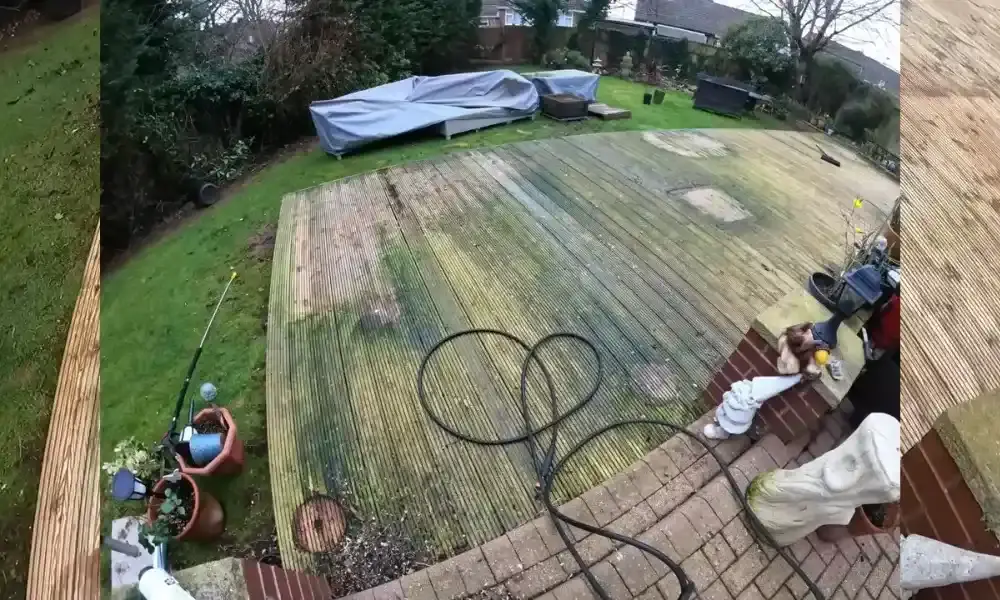
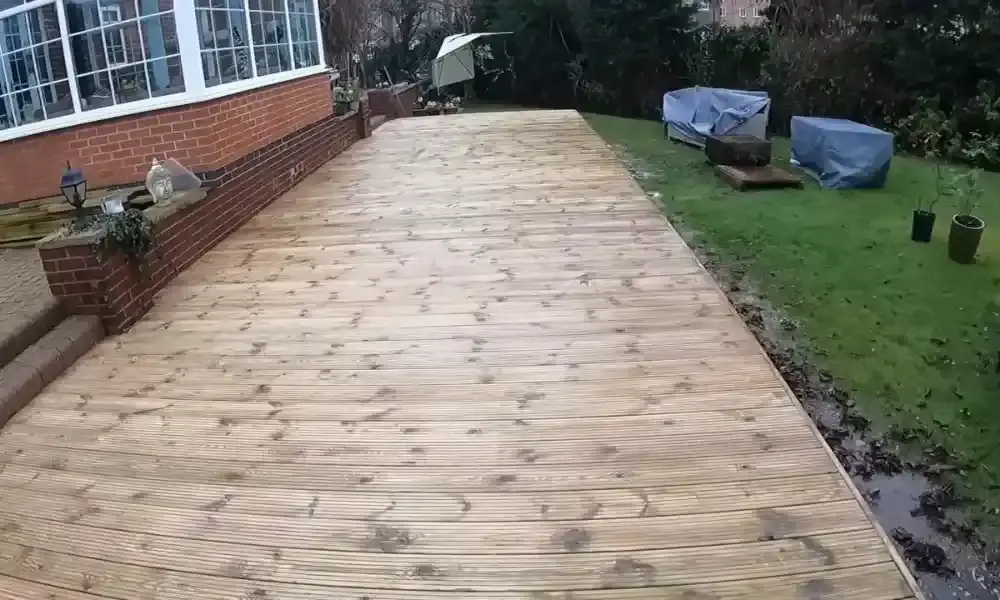
Wood Deck Cleaning Eugene: Before and After
This project shows the difference professional moss and algae removal can make on a weathered wooden deck. The cleaning method is adjusted to the condition of the boards so buildup is removed without relying on damaging high pressure.
Clear Eugene Pricing
How Much Does Deck Cleaning Eugene Cost?
The same range on our main pricing table, for a typical single level deck. Every deck is quoted after we look at it, and the written quote is the number you pay.
What moves a job higher
- Heavy moss. A thick mat needs treatment, dwell time, and brushing. Not a one pass job.
- Multi level decks and long railing runs. Spindles take real time.
- Old failing stain. A peeling finish has to come off first.
- Tough access. Hillside decks in the South Hills and second story decks need more setup.
- Repairs we find. We’ll flag them. We won’t clean over rot and pretend we didn’t see it.
Send the square footage and a photo for a same day ballpark.
One honest note
A small composite deck with light algae may not need us. A stiff brush, a garden hose, and about fifteen dollars of oxygen bleach powder handles it in an afternoon.
Straight Answer
Should You Pressure Wash a Deck? An Honest Answer
Yes, with a big qualifier. Pressure washing a deck is fine. High pressure washing a deck is not.
Low Pressure and Chemistry
The cleaner breaks down the growth and the water carries it away. Boards stay intact, grain stays tight, and the moss stays gone longer.
- Wide fan tip, 12 to 18 inches off the boards
- Cleaner dwell time instead of extra force
- Moving with the grain, never across it
- Brightener afterward to reset the wood pH
High Pressure and Force
Too much force gouges the wood, leaves stripes, and lifts the grain into a fuzzy texture. It tears the lignin, the natural binder holding wood fibers together.
- Zero degree red tips and 15 degree yellow tips
- Surface cleaners on softwood, they can’t follow the grain
- Rental machines starting at 2,000 PSI with no regulator
- Turbo and rotating tips on any wood deck
The problem with an aggressive clean
That chewed up surface then absorbs more water and grows moss faster than before, so an aggressive clean speeds up the next problem. The fix isn’t force. It’s the right chemistry and enough patience.
Cleaning Chemistry
What Never Touches Your Deck
Chlorine bleach, and we’re firm about this. Sodium hypochlorite, which is what household bleach is, causes real problems on wood.
Chlorine Bleach, Sodium Hypochlorite
- Breaks down lignin, weakening the board before anything looks wrong
- Shifts wood from slightly acidic to alkaline, damaging the cell structure
- Lightens and blotches the natural color over the following months
- Corrodes fasteners, including screws, nails, and joist hangers
- Kills the plants and lawn it runs off onto
- Doesn’t kill spores at the root, so the mold returns darker and faster
Sodium Percarbonate, an Oxygenated Cleaner
It breaks down into hydrogen peroxide and soda ash, which is why it clears growth without attacking the wood itself.
- Strong fungicide on porous surfaces like wood
- Biodegradable and landscaping safe
- Won’t attack lignin or your plants
- Works at low pressure, so the boards stay intact
The same thinking drives our house washing. Siding can’t take real pressure either, so the cleaner does the work and the water only rinses. Deck boards, siding, or shingles, the equipment changes but the logic doesn’t.
Also on the never list
Acid or ammonia cleaners on composite, anything mixed with chlorine bleach because of the gas risk, and wire brushes on softwood.
Maintenance Schedule
How Often Should a Deck Be Cleaned in Eugene?
For most homeowners, professional deck cleaning in Eugene is recommended once a year. Decks usually need cleaning more often than siding, because a deck is horizontal and holds water instead of shedding it.
-
May to June
Full professional clean
Late spring is the sweet spot, once the wet season breaks and the boards have had a chance to dry out.
-
September
Second light service
Decks under heavy conifer cover often want one, to clear needle and leaf litter before it traps water all winter.
-
October to May
Monthly sweep, your job
Don’t let fir needles overwinter in the gaps between boards. That’s where moss starts.
One timing note nobody local publishes
Because 90 percent of our rain falls October through mid May, the cleaning and staining window is narrow. Stain wants 50 to 90 degrees, moderate humidity, and dry days either side, and your deck needs 24 to 48 hours to dry after washing first. That leaves late May through mid September, and it books up.
Environmental Practice
We Keep Runoff Out of Eugene’s Storm Drains
Eugene’s storm drains aren’t connected to treatment. They discharge into Amazon Creek and the Willamette River.
Why It Matters Here
The city holds an NPDES municipal stormwater permit under the Clean Water Act, administered by Oregon DEQ, and wash water carrying detergents or old stain residue counts as wastewater, not rainwater.
What We Actually Do
We protect the drains on site, use plant safe oxygenated chemistry, and contain and dispose of wash water properly where the job calls for it. It keeps your property out of a compliance conversation you don’t want.
Honest Limits
When Cleaning Isn’t Enough
Sometimes the walkthrough turns up problems a wash won’t fix. We’ll show you. We won’t clean over it.
- Soft ledger boards
- Rot where posts meet wet concrete
- Cupped boards
- Corroded fasteners backing out
Straight talk on licensing
In Oregon, cleaning work like ours is exempt from Construction Contractors Board licensing. Repair, replacement, and installation work is not, and requires a CCB licensed contractor. We’re a cleaning company, so if your deck needs structural work we’ll tell you to bring one in, and you can verify their number through the state.
Bundle and Save
What Customers Usually Add On
The conditions that grew moss on your deck grew it everywhere else too. Same shade, same eight months of rain. Since we’re already set up, adding services costs less than booking them separately.
Roof Cleaning
If the deck has moss, the north roof slope almost certainly does. Moss lifts shingle edges and wicks water underneath.
Roof Cleaning in EugeneHouse Washing
That green film on shaded siding is the same organism in the same season.
House Washing in EugeneDriveway Cleaning
Slick algae on concrete is the same story, on the surface people actually slip on.
Driveway Cleaning in EugeneAsk about combined pricing when you request your estimate.
Why Choose Us
Why Eugene Homeowners Call Us for Deck Cleaning
We’re a local, family owned crew working across Eugene and Lane County, licensed and insured, with a free written estimate before anything starts.
Most customers tell us they’d had a bad experience before. Someone ran one setting across the whole deck and left stripes in the wood. That’s what we’re most careful about. We decide the pressure surface by surface, and we back off on older boards without being asked. No add ons halfway through, and no surprises at the end.
- Licensed & Insured
- Free Written Quotes
- Wood, Composite & Stone
- No Surprise Fees
Service Area
Areas We Serve
We clean decks throughout Eugene, including these neighborhoods.
- South Hills
- Churchill
- Bethel
- Santa Clara
- River Road
- Cal Young
- Friendly
- Whiteaker
- Ferry Street Bridge
We also serve these nearby communities.
- Springfield
- Coburg
- Creswell
- Cottage Grove
- Junction City
- Veneta
- Goshen
- Thurston
- Pleasant Hill
Outside that? Call anyway and we’ll tell you if the drive makes sense.
Straight Answers
FAQs About Deck Cleaning Eugene
How much does it cost to clean a deck in Eugene?
Most Eugene deck cleaning jobs run between $175 and $450. Size is the biggest factor, but heavy moss, multiple levels, long railing runs, and difficult access all push the price up. Every deck gets quoted after we look at it, and the estimate is free.
What is the best way to clean a deck?
Apply an oxygenated cleaner, let it dwell so it can break down the growth, agitate with a brush, then rinse at low pressure with a wide fan tip moving along the grain. Finish with a brightener to reset the wood’s pH.
Is it a good idea to pressure wash a deck?
At low pressure, yes. At high pressure, no. Too much force gouges the boards and lifts the grain, and the roughed up surface then holds more water and grows moss faster than before.
Should you jet wash wooden decking?
Not with a standard high pressure jet wash. Softwoods like cedar want roughly 500 to 600 PSI with a wide fan tip. Most consumer machines start well above that, which is how decks get striped.
What is the best homemade deck cleaner?
Oxygen bleach, sold as sodium percarbonate powder, mixed into warm water is the best homemade option. For a light film, warm water with a bit of dish soap and a stiff brush is usually enough. Never chlorine bleach, and never mix bleach with vinegar.
How do I make my wood deck look new again?
Gray wood is UV damage, not dirt. The sequence is clean, then brighten, then sand any rough spots, then stain or seal. The brightening step is what actually pulls the color back, and it’s the one people skip.
Get a Free Written Quote
Tell us the deck size, the material, and how bad the moss has gotten. We’ll give you a clear number and the safest method for your boards, with no pressure to book.
Evergreen Surface Care 1292 High St #2020, Eugene, OR 97401. One scheduling note: the dry window here runs roughly late May through mid September, and the wash and stain slots fill first. If you’re planning ahead, earlier is better.