
Roof Moss Prevention Guide · Eugene, OR
Zinc and Copper Strips for Roof Moss Prevention in Eugene: Do They Really Work?
Metal roof strips can help, but they are not a cure for heavy moss. In Eugene, the best results come from cleaning existing growth first, understanding runoff, then using prevention where it makes sense.
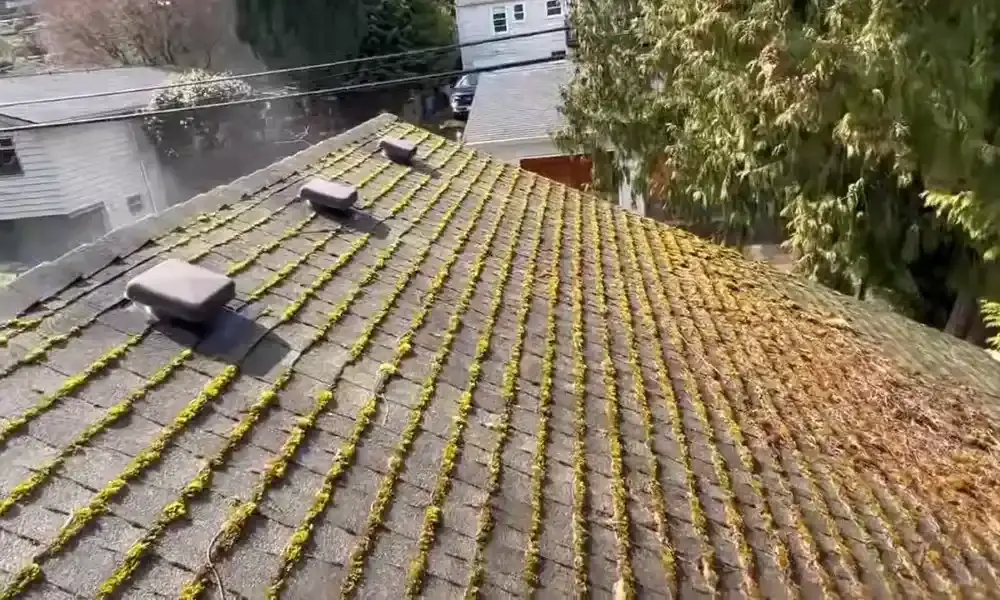
Yes, zinc and copper strips can help suppress roof moss in Eugene, but they work better as prevention than as a cure. They are most useful after existing moss has been removed. Roof shape, shade, rainfall, drainage, and runoff coverage all affect the result.
- ≈15 ftEugene guidance reference for zinc-strip coverage below the strip
- PreventionBest role for zinc and copper strips
- Low pressureSafer direction for asphalt shingle cleaning
- RunoffA local environmental factor worth checking first
If you own a home in Eugene, moss on the roof probably does not feel unusual.
You see it on shaded north-facing slopes, beneath large fir trees, around roof valleys, and anywhere debris stays damp after the rain stops.
That makes zinc and copper strips sound appealing.
Install a strip near the roof ridge, let Eugene’s rain do the work, and stop moss from returning.
But do zinc and copper strips for roof moss prevention in Eugene actually work?
Yes, zinc and copper strips can help suppress roof moss, but they work better as prevention than as a cure. They are most useful after existing moss has been removed. Their effectiveness also depends on roof design, shade, rainfall, drainage, and how far water travels below the strip.
That distinction is especially important in Eugene.
The City of Eugene says moss thrives locally because of our moist, temperate conditions. Shaded roofs remain wet longer, while leaves, branches, and other organic material give moss an even better place to establish.
So while a metal strip can help, it should usually be one part of a broader roof moss prevention plan.
Why Is Roof Moss So Common in Eugene, Oregon?
Eugene gives moss almost everything it needs.
Moisture is the biggest factor.
The Pacific Northwest’s long wet season keeps roof surfaces damp for extended periods. Shade from mature trees can make the problem worse because those roofs dry much more slowly.
Eugene Public Works specifically notes that moss thrives in the area’s moist, temperate environment and that shaded rooftops create especially favorable conditions. Moss is most active during wet, cool periods and becomes dormant during dry summer weather.
That is why one side of a roof can look relatively clean while another develops a thick green layer.
Common problem areas include:
- North-facing roof slopes
- Homes under Douglas firs and other mature trees
- Roof valleys filled with needles and leaves
- Areas behind chimneys and dormers
- Sections that receive little direct sunlight
- Gutters and roof edges that remain damp
Moss is not merely an appearance problem.
Oregon State University explains that moss can trap moisture and debris. On asphalt roofs, established growth can also lift shingles and allow water to reach layers underneath.
That is why prevention makes sense.
The question is whether metal strips are the right prevention method.
How Do Zinc Roof Strips Work?
Zinc strips are normally installed near the ridge of a sloped roof.
When rain contacts the exposed zinc, small amounts of zinc wash down the roof with the water.
That runoff creates conditions that make it more difficult for moss and other biological growth to establish.
You may have already noticed this effect around metal roof vents.
Sometimes an otherwise mossy roof has a clean-looking streak immediately below galvanized flashing or another metal fixture.
That same runoff effect is what a zinc strip is designed to create across a wider area.
Oregon State University explains that zinc strips slowly release metal that travels down the roof and inhibits biological growth. OSU also notes that larger roofs may require multiple strips because the metal becomes diluted as runoff travels farther down the slope.
That last point is important.
One strip at the ridge does not automatically protect an entire roof.
How Far Down a Eugene Roof Will a Zinc Strip Work?
Eugene Public Works says zinc strips can kill or retard moss growth for approximately 15 feet below the strip. Roof shape and runoff still matter.
According to Eugene Public Works, zinc strips can kill or retard moss growth for approximately 15 feet below the strip.
The city also says they work best before moss becomes well established.
That gives Eugene homeowners a useful rule of thumb.
Suppose your roof slope measures 24 feet from ridge to gutter.
Installing one zinc strip at the very top may help the upper portion.
It may provide much less protection closer to the gutter.
A longer roof may need additional rows if the product instructions allow them.
Roof shape also matters.
A chimney can redirect water.
Dormers create separate drainage areas.
Valleys concentrate runoff.
A complicated roof may therefore have sections that receive little benefit even when the strip itself is installed correctly.
This is one reason professional roof moss removal in Eugene should start with an inspection rather than a one-size-fits-all recommendation.
Will Zinc Strips Remove Moss That Is Already Growing?
Usually, this is the wrong job for them.
Zinc strips should primarily be considered a moss-prevention tool.
Eugene Public Works says they are most effective before moss is well developed.
If your roof already has thick moss pushing between shingles, installing metal at the ridge does not solve the immediate problem.
The established growth still needs attention.
Oregon State University recommends beginning moss control with physical measures. That can include removing debris, improving sunlight and airflow where practical, and carefully removing moss without damaging the roofing material.
For Eugene homeowners, the better sequence is usually:
- Inspect the roof.
- Remove leaves, needles, and loose debris.
- Treat or remove established moss safely.
- Clean gutters and drainage areas.
- Consider zinc or another prevention method afterward.
- Inspect the roof periodically for regrowth.
The strip is the maintenance step.
It is not the initial cleaning.
Should You Pressure Wash Moss Off an Asphalt Roof?
Do not treat shingles like concrete
High pressure can remove protective granules and force water where it does not belong. The cleaning method should match the roofing material.
For asphalt shingles, high pressure is usually something to avoid.
Oregon State University specifically advises against high-pressure devices for composite shingles because they can remove the protective granular layer and reduce roof longevity.
That distinction is important for a pressure-washing company.
Not every exterior surface should be cleaned with high pressure.
Concrete may tolerate one cleaning method.
Siding may require another.
Asphalt shingles need a much gentler approach.
For our roof cleaning in Eugene, the cleaning method should always match the roofing material rather than treating every roof like a driveway.
That is also why homeowners searching for “pressure washing roof moss Eugene” should be careful about who they hire.
The right question is not:
“How much pressure can remove this moss?”
It is:
“What is the safest method that removes or treats the growth without shortening the life of the roof?”
What About Copper Strips?
Copper works on a similar principle.
Rain passes over the exposed copper and carries small amounts of the metal down the roof.
Those compounds can discourage moss and other biological growth.
Copper may provide strong biological suppression, but stronger is not always better.
For Eugene homeowners, runoff deserves serious consideration.
The City of Eugene warns that products containing zinc and copper can be harmful to fish and other aquatic organisms. When contaminated runoff reaches storm drains, it can eventually enter the local river system.
That makes this more than a roofing decision.
It is also a drainage decision.
Are Zinc and Copper Strips Environmentally Safe in Eugene?
Follow the runoff
Before choosing a metal strip, look at where the gutter water goes. Eugene guidance warns that zinc and copper can affect aquatic organisms.
This is one of the most important local differences between a generic moss article and an article written specifically for Eugene.
Eugene takes stormwater runoff seriously.
The city’s moss-control guidance warns that copper, zinc, and several other moss-control ingredients can harm aquatic organisms.
Its recommendation is to start with physical moss-control measures and use chemical controls carefully when additional treatment is necessary.
For homeowners considering metal strips, look at where the gutters discharge.
Extra caution makes sense if roof runoff travels toward:
- A storm drain
- A creek
- A pond
- A drainage ditch
- A sensitive landscaped area
- A waterway
Zinc strips may still have a role.
But the best Eugene roof-maintenance plan should consider what happens to the water after it leaves the shingles.
That local environmental context is something national articles often miss.
Zinc vs. Copper Strips for Eugene Homes
| Factor | Zinc Strips | Copper Strips |
|---|---|---|
| Moss prevention | Good when runoff reaches growth areas | Can also suppress moss effectively |
| Existing heavy moss | Not a replacement for cleaning | Not a replacement for cleaning |
| Cost | Usually lower | Usually higher |
| Rain dependency | Yes | Yes |
| Long slopes | May require additional coverage | Same basic limitation |
| Runoff concerns | Yes | Yes, especially near aquatic environments |
| Best use | Prevention after roof cleaning | Select prevention situations |
| Eugene consideration | City warns about zinc runoff | City warns about copper runoff |
For many homeowners, zinc is the more familiar option.
But neither material should be treated as an automatic upgrade.
The roof itself should decide.
When Are Zinc Strips Worth Installing in Eugene?
Zinc strips make the most sense when:
- Existing moss has already been addressed.
- The roof has recurring light moss growth.
- Rainwater can reach the strip consistently.
- The roof has simple drainage paths.
- The homeowner understands that prevention is not permanent.
- Runoff can be managed responsibly.
- The roof is in good enough condition for installation.
They make less sense when:
- Moss already covers large portions of the roof.
- Shingles are brittle or damaged.
- The roof has complicated drainage patterns.
- Heavy tree debris is the main problem.
- The homeowner expects one strip to eliminate maintenance.
- Roof runoff enters a sensitive water area.
Sometimes the smartest recommendation is not another product.
It is better maintenance.
What Works Better Than Zinc Strips for Heavy Moss?
When moss is already established, deal with the growth first.
A complete Eugene moss-control strategy may include:
Remove roof debris
Leaves and fir needles hold moisture against shingles.
Keeping valleys and roof surfaces clear removes some of the conditions moss needs.
Improve sunlight and airflow
Where practical, pruning overhanging branches can allow a roof to dry faster.
Eugene Public Works recommends reducing shade and increasing air circulation as an important first step.
Clean gutters
A clean roof draining into clogged gutters still has a moisture problem.
Regular gutter cleaning in Eugene can help water leave the roof more efficiently.
Treat existing growth appropriately
Heavy moss normally needs treatment or careful removal before preventive strips can provide much value.
Maintain the roof afterward
Prevention works better when homeowners address small regrowth before it becomes another thick mat of moss.
This combination tends to make more sense than expecting zinc alone to handle Eugene’s wet conditions.
Do Zinc Strips Last for Years?
Do not assume they will provide the same performance indefinitely.
Eugene Public Works lists zinc strips as capable of lasting up to one year in its moss-control guidance.
Actual performance can vary because of:
- Rainfall
- Roof pitch
- Strip thickness
- Installation
- Tree cover
- Roof length
- Moss pressure
- Metal weathering
The better promise is therefore not “install once and forget about moss.”
It is:
Zinc strips can help slow moss regrowth when they are correctly installed and combined with good roof maintenance.
That is both more accurate and more useful to Eugene homeowners.
Can Zinc Strips Damage a Roof?
The zinc itself is not necessarily the main risk.
Installation can be.
Some strips require fasteners or shingles to be lifted.
Poor installation can create potential leak points.
OSU’s current pest-management guidance cautions that roof-mounted zinc products may lead to leaks if they are installed incorrectly.
You should also consider compatibility with other metals.
OSU notes that zinc sulfate is corrosive to copper, which is another reason roofing metals, gutters, flashing, and treatments need to be considered together.
An older roof deserves particular caution.
Saving money on moss prevention makes little sense if the installation damages brittle shingles.
Are Zinc Strips Better Than Regular Roof Cleaning?
They serve different purposes.
Roof cleaning addresses what is already there.
Zinc strips attempt to slow what comes next.
For many Eugene homes, the most sensible approach is:
Clean first. Prevent second. Maintain afterward.
That is the relationship between professional roof cleaning in Eugene and zinc-strip prevention.
One should support the other.
How Often Should Eugene Homeowners Check for Moss?
At least inspect the roof regularly, particularly after Eugene’s wetter months and after periods of heavy leaf or needle drop.
You do not need to climb onto the roof to perform a basic check.
From the ground, look for:
- Green growth along shingle edges
- Moss near valleys
- Debris behind chimneys
- Dark or damp-looking north slopes
- Overflowing gutters
- Lifted shingles
- Branches touching the roof
Catching a small problem is much easier than dealing with years of accumulated moss.
Should I Install Zinc Strips or Call a Roof Cleaner?
Ask yourself one question:
Is my problem existing moss or future moss?
If thick moss is already present, start with roof cleaning and moss removal.
If the roof has been cleaned and you want to reduce future regrowth, zinc strips may be worth discussing.
If you are unsure, an inspection can determine whether the roof needs cleaning, treatment, prevention, or repairs before anything else is done.
For Eugene homes, that is usually safer than buying a moss-control product before understanding why the roof keeps growing moss.
Frequently Asked Questions About zinc strips for roof moss prevention Eugene
Do zinc strips really prevent roof moss in Eugene?
Will zinc strips remove thick moss?
Why does moss grow so quickly on Eugene roofs?
Are copper strips better than zinc?
Are zinc strips safe around Eugene’s stormwater system?
How far below a zinc strip does it work?
Can I pressure wash moss from asphalt shingles?
Should zinc strips be installed before or after roof cleaning?
Do I still need roof maintenance after installing zinc?
Can I install zinc strips myself?
The Bottom Line for Eugene Homeowners
Zinc and copper strips for roof moss prevention in Eugene can work.
But they should not be marketed as a permanent cure.
Eugene’s wet climate, mature trees, shaded roof slopes, and long periods of moisture create strong moss pressure. A narrow strip of metal cannot correct all of those conditions.
The best results usually come from combining several strategies:
Remove existing moss safely.
Clear leaves and needles.
Keep gutters draining.
Reduce excessive shade when practical.
Then consider zinc strips as an additional layer of prevention.
If moss is already established on your roof, Evergreen Surface Care can assess the roof and recommend the appropriate cleaning method rather than blasting asphalt shingles with damaging pressure.
Need help with roof moss in Eugene? Call Evergreen Surface Care at (541) 603-0340 for a roof-cleaning estimate.
Deal With Existing Roof Moss Before It Gets Heavier
If moss is already established, prevention strips are not the first step. We can assess the roof, explain the cleaning approach, and give you a clear written estimate.
Evergreen Surface Care provides pressure washing in Eugene, OR with surface-specific methods for roofing, siding, concrete, gutters, decks, fences, patios, and other exterior materials.