
House Care Guide · Western Oregon
How Often Should You Wash Your House in Western Oregon?
There is no useful one-size-fits-all anniversary. Most Western Oregon homes fall near a 12 to 24 month cycle, but shade, tree cover, airflow, orientation, siding condition, and visible growth should make the final call.
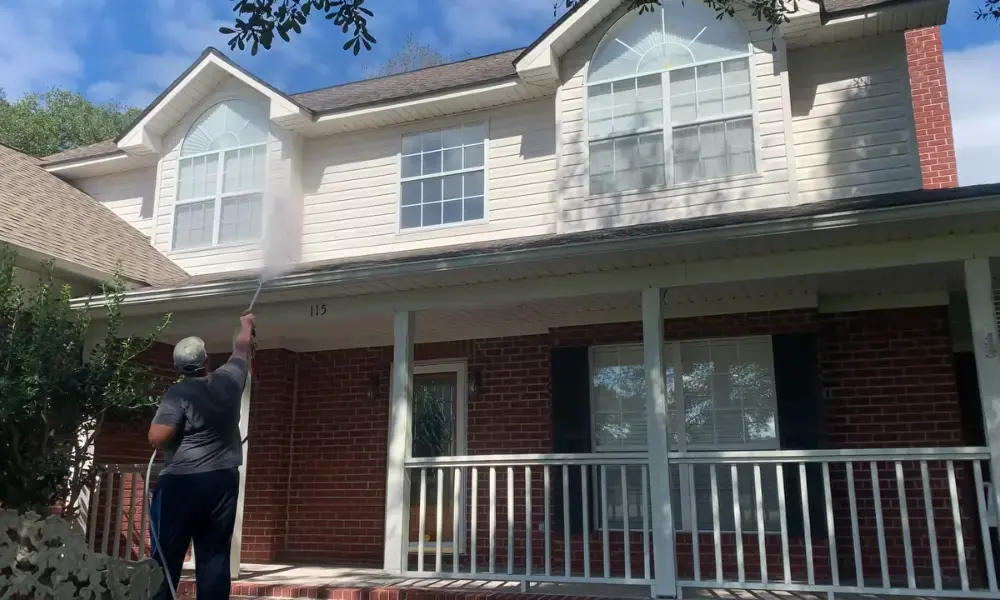
If you live in Western Oregon, a clean house exterior rarely stays clean forever.
Months of rain keep shaded siding damp. Douglas firs block sunlight and drop needles, pollen, and debris. North-facing walls can stay wet long after the rest of a home dries. By spring, a wall that looked fine last summer may have a faint green film creeping across it.
So, how often should you wash your house?
Most homes in Western Oregon should be inspected every year and washed about every 12 to 24 months. Homes with heavy shade, nearby trees, poor airflow, or recurring algae may need cleaning closer to once a year. Sunnier homes that dry quickly can often go longer.
The important part is not following an exact anniversary. Your home’s exposure, siding material, and visible buildup should determine when it needs cleaning.
Here’s how to work out the right schedule for your property.
- 12–24 moTypical Western Oregon washing range
- 1× yearlyBest minimum inspection schedule
- North sideOften the first wall to show green growth
- Condition firstLet the siding, not the calendar, decide
Inspect your home every year and expect to wash it about every 12 to 24 months. Move closer to 12 months when shade, Douglas firs, poor airflow, or recurring green growth keep siding damp. Sunnier, open homes can often go longer.
How Often Should You Wash a House in Western Oregon?
For most Western Oregon homes, every one to two years is a practical starting point.
That does not mean every home needs washing every 12 months. It also does not mean you should automatically wait two years.
A better schedule looks like this:
| Home conditionWhen to inspectTypical washing interval | ||
|---|---|---|
| Sunny, open property with good airflow | Every year | About 18 to 24 months |
| Average Western Oregon home | Every year | About 12 to 24 months |
| Shaded property with mature trees | Every 6 to 12 months | About 12 to 18 months |
| North-facing siding with recurring algae | Every 6 to 12 months | Often around 12 months |
| Visible green or dark organic growth | Now | Clean based on condition |
| Peeling paint, damaged siding, or failed caulk | Before washing | Inspect or repair first |
These are maintenance ranges, not rigid deadlines.
Two houses on the same Eugene street can need completely different schedules. One may sit in full afternoon sun. The house next door may be surrounded by firs with a narrow, shaded side yard.
Their siding will not dry at the same rate.
That is why the calendar should start the conversation, not make the final decision.
Why Do Western Oregon Homes Need More Frequent Exterior Cleaning?
Western Oregon gives homeowners beautiful green landscapes for a reason: moisture.
That same environment affects exterior surfaces.
Rain and long periods of damp weather allow siding to remain wet. Shade slows evaporation. Trees and shrubs can reduce airflow around walls. Pollen, dust, and other debris then collect on those damp surfaces.
The result is often visible organic growth.
In Eugene and elsewhere in the Willamette Valley, the first signs commonly appear on areas that receive the least sunlight.
You may notice:
- green film on shaded siding
- darker areas beneath eaves
- buildup around trim
- dirty areas below gutter corners
- growth behind shrubs
- discoloration along narrow side yards
- one side of the house becoming dirty much faster than the others
Moisture is therefore only part of the equation.
Moisture plus shade plus limited airflow is what often shortens a home’s cleaning cycle.
This is also why copying a house-washing schedule from a homeowner in a dry climate does not make much sense for a property in Eugene.
Does a North-Facing Wall Need Washing More Often?
Start with the slowest-drying wall
In Eugene, the north side often reveals the cleaning need first because it receives less direct sun and can stay damp longer after rain.
Often, yes.
The north side of a house receives less direct sunlight than other elevations. In Western Oregon’s damp climate, that can mean the siding stays wet longer after rain.
Add a fence, neighboring house, dense shrubs, or tall trees, and drying can slow even more.
This explains a situation many homeowners find confusing.
The front of the house looks clean.
The south-facing wall looks clean.
Then you walk around the back or down a shaded side yard and find green siding.
That does not necessarily mean the entire exterior is equally dirty. It means one part of the property has better growing conditions for algae and similar buildup.
If this keeps happening at your home, read our guide to why green algae returns on north-facing siding. It explains the moisture, shade, airflow, and landscaping factors behind the pattern.
The practical lesson is simple: inspect the dirtiest side of your house first.
It will often tell you that cleaning is due before the sunny side does.
How Does Tree Cover Change Your House-Washing Schedule?
Mature trees can shorten the time between cleanings.
This matters throughout Eugene and Lane County, where many residential properties have established Douglas firs and other large trees nearby.
Trees affect siding in several ways.
First, their canopy creates shade. Shaded walls dry more slowly.
Second, nearby vegetation can restrict airflow.
Third, pollen, needles, leaves, and other organic debris accumulate around the home.
A house on an open lot may remain presentable for close to two years. A similar house under dense tree cover may begin showing green growth within a year.
You do not need to remove healthy trees just to keep siding clean.
Instead, pay attention to the conditions immediately around the house.
Trim shrubs away from siding where appropriate. Keep gutters working correctly. Avoid constantly spraying exterior walls with irrigation. Allow as much normal airflow around the building as the landscaping permits.
Those small changes can reduce how long surfaces remain damp.
Should You Wash Your House Every Year?
Not automatically.
Annual inspection makes sense for Western Oregon. Automatic annual washing does not make sense for every property.
If your siding is clean, sound, and drying normally, washing simply because twelve months have passed may provide little benefit.
Walk around the property instead.
Look closely at:
- north-facing siding
- lower sections behind shrubs
- areas beneath roof overhangs
- siding around downspouts
- walls beside fences
- shaded corners
- trim around doors and windows
- areas below a mossy roofline
If those surfaces remain clean, waiting may be reasonable.
If established green or dark buildup has appeared, the condition of the house is giving you a better signal than the date on a calendar.
This condition-based approach can also prevent unnecessary cleaning.
The goal is not to wash a house as often as possible. The goal is to clean it when the exterior actually needs maintenance.
Can You Wait Two Years Between House Washes?
Some Western Oregon homeowners can.
A home with good sun exposure, limited tree cover, open airflow, and siding that remains relatively dry may stay clean for 18 to 24 months.
The key is checking rather than assuming.
A two-year schedule becomes less realistic when:
- the north wall turns green every winter
- trees heavily shade the property
- shrubs grow close to the siding
- gutters overflow or leak
- walls stay damp for long periods
- the home has a history of recurring algae
- visible buildup is already spreading
In those situations, waiting for a two-year anniversary serves no purpose.
On the other hand, a house that still looks clean after 18 months does not need aggressive cleaning simply because an online maintenance schedule says it does.
Let the condition of the exterior decide.
How Often Should Different Siding Materials Be Cleaned?
Siding material matters, but exposure usually matters more.
A shaded wall can become dirty sooner than a sunny wall made from the exact same material.
Still, each surface deserves slightly different attention.
Vinyl siding
Vinyl commonly shows green organic growth clearly, especially on lighter colors.
Check it at least once a year. Pay particular attention to seams, shaded walls, areas behind landscaping, and sections below gutters.
Do not assume visible green staining requires stronger water pressure. Cleaning method and frequency are separate issues.
Fiber cement siding
Fiber cement is durable, but its painted finish still needs care.
Inspect the coating as well as the cleanliness of the wall. If paint is failing, cracking, or peeling, address that condition before treating the wall like an ordinary cleaning project.
Cedar and other wood siding
Wood deserves closer attention because prolonged moisture can matter more than appearance alone.
Look for more than dirt.
Check for peeling coatings, soft areas, failed caulk, and signs that water is reaching places it should not.
Cleaning cannot repair deteriorated wood or failing paint.
Painted siding
The condition of the coating should determine what happens next.
Sound painted siding with surface algae may be suitable for gentle cleaning. Peeling or badly weathered paint may need repair or repainting instead.
If you are unsure which method is appropriate for your siding, our Eugene house washing service explains how we approach vinyl, cedar, stucco, brick, fiber cement, and painted exteriors differently.
What Are the Signs Your House Needs Washing Now?
You do not have to wait until every wall looks dirty.
Early signs are usually easier to spot in predictable locations.
Green growth on siding
Green film is one of the clearest signals, particularly on shaded elevations.
A few isolated marks do not always mean the entire house needs immediate cleaning. Widespread or returning growth deserves closer attention.
Dark buildup beneath eaves
Areas protected from direct rain can still collect moisture, dirt, cobwebs, and organic buildup.
Look upward during your annual inspection instead of checking only the siding at eye level.
One wall looks noticeably darker
Compare opposite sides of the house.
A clean south-facing elevation and green north-facing elevation tell you something important about sun and drying conditions.
Buildup around gutters and downspouts
Staining near gutter corners can indicate more than a dirty wall.
Check whether gutters are overflowing, leaking, or directing water where they should not.
Cleaning the siding without correcting the water source can lead to the same problem returning.
Your home’s color looks dull
Not every dirty house turns bright green.
Pollen, road dust, grime, cobwebs, and light organic buildup can gradually make an exterior look dull.
Compare protected areas with exposed sections to see how much the appearance has changed.
Should You Wash the Whole House If Only One Side Is Green?
Not always.
Western Oregon homes rarely get dirty at exactly the same rate on all four sides.
A shaded north wall might need attention while the sunny front still looks good.
Whether partial or whole-house cleaning makes sense depends on three things.
First, consider how different the cleaned wall may look from the others afterward.
Second, inspect the supposedly clean elevations closely. Early buildup is easier to miss before it becomes strongly colored.
Third, consider the setup involved. Sometimes cleaning the complete exterior makes more practical sense once equipment and property protection are already in place.
But there is no rule saying one green wall automatically means every square foot of siding desperately needs cleaning.
This is another reason an inspection is more useful than an arbitrary schedule.
What Is the Best Time of Year to Wash a House in Western Oregon?
There is no single month when every Western Oregon home must be washed.
A useful approach is to inspect the exterior after the wettest part of the year, then schedule cleaning when conditions and the siding warrant it.
Spring is convenient because winter often reveals the property’s dampest areas. Green growth that developed during months of shade and moisture is easy to identify.
Late spring and summer can also provide practical working conditions and make it easier to inspect siding, trim, paint, and caulk.
Fall can work too, particularly when you are preparing the exterior before another wet season.
More important than choosing the perfect month is avoiding a bigger mistake: allowing established buildup to remain simply because you are waiting for a preferred season.
If the exterior clearly needs attention, deal with the condition rather than waiting for a date on the calendar.
Is House Washing the Same as Pressure Washing?
Not necessarily.
Homeowners often use “pressure washing” as a general term for exterior cleaning. But siding does not normally need the same treatment as a concrete driveway.
High water pressure can damage certain exterior materials, force water behind siding, or disturb aging coatings.
For many residential exteriors, soft washing uses cleaning solution and lower pressure to remove organic buildup without relying on force alone.
Hard surfaces and delicate siding therefore should not automatically receive the same treatment.
If you want a deeper explanation of the method, see our guide to soft washing in Eugene.
The important point for a maintenance schedule is this: washing more frequently does not mean using more pressure.
Correct method matters just as much as correct timing.
Can Washing a House Too Often Be a Problem?
Yes, if the cleaning is unnecessary or the method is inappropriate.
There is little reason to repeatedly clean siding that is already clean.
Every maintenance job should have a purpose.
Maybe you are removing established algae. Maybe pollen and grime have noticeably dulled the exterior. Maybe you are preparing for painting or listing the property for sale.
Those are reasons.
“It’s been exactly twelve months” is not always one.
Overcleaning also becomes more concerning when someone relies on aggressive pressure rather than a surface-appropriate method.
A sensible Western Oregon maintenance plan is therefore:
Inspect regularly. Clean when needed. Match the cleaning method to the material.
That is more useful than treating annual washing as a mandatory subscription.
What Can Make Algae Return Faster After Cleaning?
If growth returns unusually fast, look beyond the cleaning schedule.
Something around the property may be keeping that area wetter than the rest.
Common causes include:
- dense shrubs touching or crowding siding
- deep shade from trees
- a narrow side yard with poor airflow
- leaking or overflowing gutters
- irrigation hitting the wall
- roof runoff reaching siding
- fences or structures blocking sunlight and airflow
Cleaning removes buildup. It does not change the physical conditions around the house.
For example, a shaded wall beside dense landscaping may continue getting green faster than an open wall after both are cleaned on the same day.
If possible, correct the moisture or airflow issue as part of your maintenance plan.
Oregon State University Extension also recommends keeping plants and shrubs trimmed to allow airflow around the exterior and preventing sprinklers from hitting the house.
What Should You Check During a Yearly Exterior Walkaround?
You can learn a lot about your house in ten minutes.
Choose roughly the same time each year and walk around all four sides.
Start with the north side.
Then check walls under trees, around downspouts, behind shrubs, beside fences, and beneath eaves.
Look for:
- Green, gray, or dark organic growth
- Dirt and pollen buildup
- Overflow marks below gutters
- Peeling or blistering paint
- Failed or cracked caulk
- Soft or damaged wood
- Loose siding
- Vegetation touching the building
- Irrigation spraying exterior walls
- Areas that remain damp much longer than surrounding surfaces
Take a few photos from the same positions each year.
Photos make slow changes much easier to recognize. Memory is surprisingly poor at telling you whether that green patch has doubled in size since last spring.
If you discover damaged siding, failing paint, or open joints, repair may need to come before cleaning.
When Should You Clean Instead of Waiting?
A simple rule works well:
Do not wash because the calendar says so. Wash when the exterior’s condition says so.
If your house was cleaned last year and still looks good, inspect it and keep monitoring.
If it has been only ten months but the north side is already covered in green growth, waiting another fourteen months to satisfy a two-year schedule makes little sense.
Similarly, do not expect cleaning to solve a maintenance problem it cannot fix.
House washing can remove surface dirt and organic growth. It cannot repair rotten wood, restore failed caulk, or make peeling paint sound again.
The best maintenance decision sometimes is to wash.
Sometimes it is to wait.
And sometimes it is to repair the surface first.
Sunny, open lot
Good airflow and afternoon sun help siding dry. Inspect yearly, but the house may stay presentable closer to 18 to 24 months.
Shaded home under firs
Tree cover, needles, and limited sun can shorten the cycle. Check every 6 to 12 months and expect cleaning nearer the one-year mark.
Green north-facing wall
One elevation may need attention before the rest of the home. Treat the visible condition as the signal rather than waiting for a fixed anniversary.
A Practical House-Washing Schedule for Eugene Homeowners
For Eugene and much of Western Oregon, this simple routine works better than obsessing over an exact number of months.
Every spring: Walk around the house and inspect all elevations.
During summer: Watch shaded walls for recurring growth and take care of repairs while conditions make them easier to spot.
Before the wet season: Check gutters, drainage, vegetation, caulk, paint, and areas that stay damp.
Every 12 to 24 months: Expect that many homes will need exterior washing somewhere within this range.
Closer to 12 months: Pay extra attention if your property has heavy shade, mature trees, recurring algae, or north-facing walls that stay damp.
Closer to 24 months: Homes with open exposure, good airflow, and clean siding may reasonably go longer.
And at any point, visible buildup can override the schedule.
Your house does not know how many months have passed since its last cleaning. It responds to moisture, shade, airflow, vegetation, and weather.
Your maintenance plan should do the same.
Frequently Asked Questions About House-Washing Frequency
How often should you wash your house in Oregon?
How often should I wash my house in Eugene?
Should I pressure wash my house every year?
Is once a year too often to wash a house?
Can I wait until my siding turns green?
Why does only one side of my house get green?
Does rain clean house siding?
The Bottom Line
So, how often should you wash your house in Western Oregon?
Plan to inspect it every year and expect a professional wash roughly every 12 to 24 months. Move toward the shorter end of that range if your home is shaded, surrounded by trees, or repeatedly develops green growth. Move toward the longer end if the siding gets plenty of sun, dries quickly, and remains clean.
Most importantly, stop treating the calendar as a deadline.
Walk around your property. Check the north-facing wall. Look behind shrubs and below gutters. Pay attention to where moisture lingers.
Your home’s condition will usually tell you when it is time.
If your siding is already showing algae, mildew, pollen, or widespread buildup, Evergreen Surface Care provides house washing in Eugene and Lane County using cleaning methods matched to the exterior surface. We can inspect the property first, explain whether it actually needs cleaning, and provide a written estimate before any work begins.
If the Siding Is Already Green, Start With the Condition of the Home
We match the cleaning method to the siding and explain whether the exterior actually needs washing before work begins.
Evergreen Surface Care provides house washing in Eugene, OR with surface-specific methods for vinyl, cedar, stucco, brick, fiber cement, and painted exteriors.